

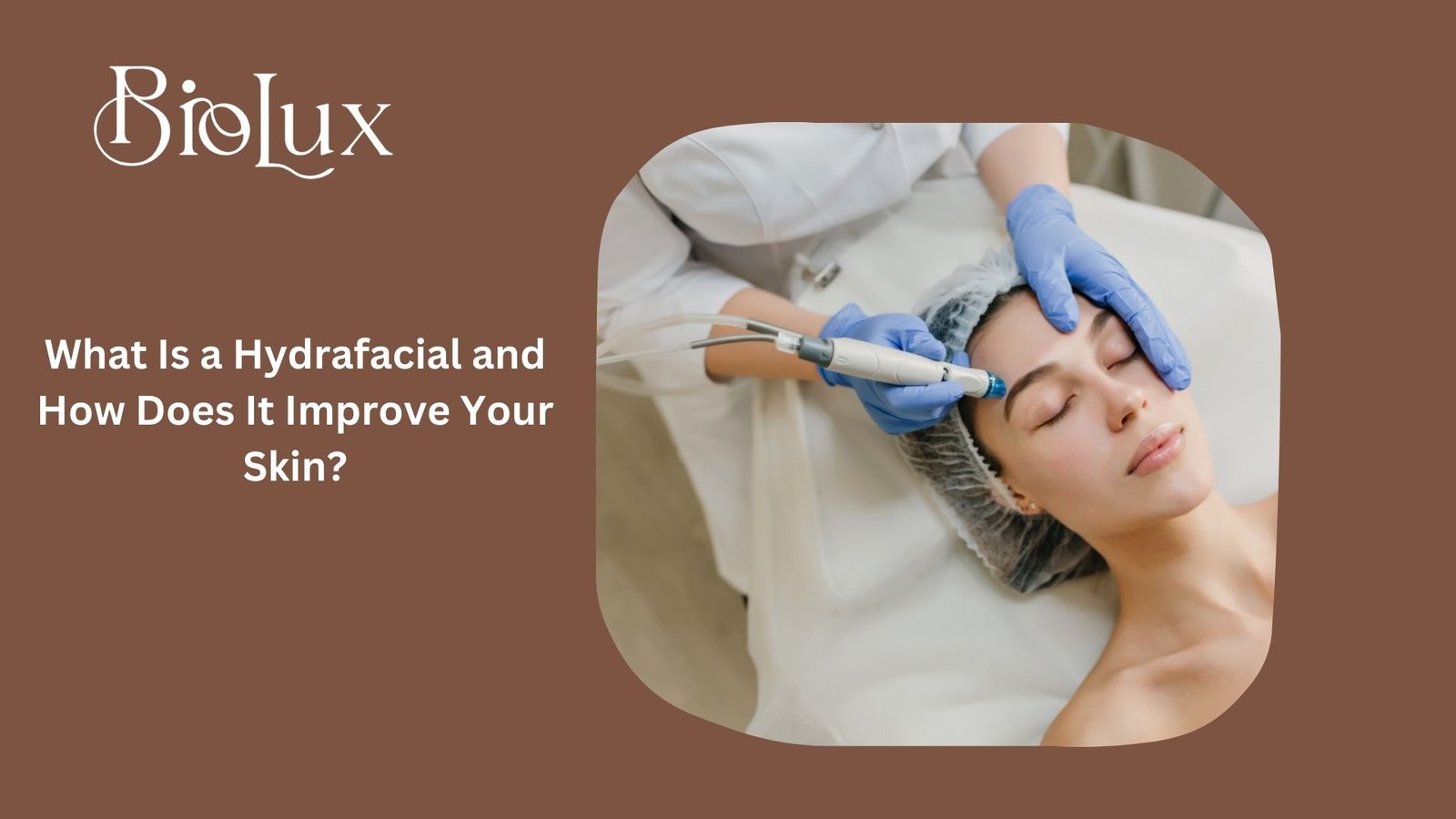
A Hydrafacial is a non-invasive skin treatment that cleanses, exfoliates, extracts impurities, and hydrates the skin in one session. Unlike a traditional facial, a Hydrafacial uses a patented vortex technology to remove dead skin cells and infuse the skin with hydrating serums at the same time.
Many patients choose Hydrafacial treatments to improve skin texture, reduce fine lines, clear congested pores, and restore a healthy glow without downtime. If you’re looking for a gentle yet results-driven facial treatment, this procedure often becomes a go-to option.
What Is a Hydrafacial?
A Hydrafacial is a multi-step facial treatment performed using a specialized device. It combines:
• Deep cleansing
• Gentle exfoliation
• Painless suction-based extraction
• Hydration with antioxidant-rich serums
The treatment is suitable for most skin types, including sensitive skin. It addresses concerns such as acne, enlarged pores, uneven skin tone, and mild wrinkles. Because it is non-invasive, many people schedule a Hydrafacial before events or as part of a monthly skincare routine.
How Does a Hydrafacial Improve Your Skin?
Hydrafacial treatments improve skin through a structured process.
1. Deep Cleansing and Exfoliation
The first step removes surface debris and dead skin cells. This helps improve skin clarity and allows active ingredients to penetrate more effectively.
2. Gentle Extraction
Using vacuum-powered technology, clogged pores and excess oil are removed without manual squeezing. This makes it less irritating than traditional extraction methods.
3. Hydration and Serum Infusion
The final stage delivers hyaluronic acid, peptides, and antioxidants directly into the skin. This step supports hydration, smoothness, and improved elasticity.
According to the Hydrafacial website, there are 3.5 million Hydrafacial treatments performed each year around the world. That number suggests strong patient satisfaction and consistent demand. Not every skincare trend lasts. This one has.
What Skin Concerns Can a Hydrafacial Treat?
Hydrafacial is commonly used to improve:
• Fine lines and mild wrinkles
• Oily or congested skin
• Enlarged pores
• Hyperpigmentation
• Uneven skin tone
• Dull or dehydrated skin
Some patients notice immediate brightness. Others see gradual improvement after a few sessions. Results vary depending on skin condition and consistency of care.
Hydrafacial vs Traditional Facial
Many patients ask how a Hydrafacial compares to a regular facial. Here’s a simple breakdown:
| Feature | Hydrafacial | Traditional Facial |
| Extraction Method | Vacuum technology | Manual extraction |
| Hydration | Targeted serum infusion | Cream-based products |
| Downtime | Minimal to none | Possible redness |
| Customization | Device-controlled | Manual adjustment |
Is Hydrafacial Safe?
Hydrafacial treatments are generally safe when performed by trained professionals. The procedure is non-invasive and does not require anesthesia. Mild redness may occur but usually fades within hours. People with active skin infections, severe rosacea, or certain medical conditions should consult a qualified provider before treatment.
How Often Should You Get a Hydrafacial?
Many providers recommend a Hydrafacial every 4 to 6 weeks. Regular treatments may help maintain skin clarity and hydration. Occasional sessions can still provide short-term radiance, especially before special events.
What to Expect During Your Hydrafacial Appointment
A typical Hydrafacial session lasts about 30 to 45 minutes.
You may experience:
• A cooling sensation
• Light suction
• No significant discomfort
There is no required downtime. Most patients return to daily activities immediately.
FAQs
1. How long do Hydrafacial results last?
Hydrafacial results typically last 4 to 6 weeks, depending on your skin type and skincare routine.
2. Is Hydrafacial good for acne-prone skin?
Hydrafacial can help clear clogged pores and reduce excess oil, making it suitable for mild to moderate acne concerns.
3. Can Hydrafacial reduce fine lines and wrinkles?
Hydrafacial treatments support hydration and collagen health, which may soften the appearance of fine lines over time.
4. Is Hydrafacial better than chemical peels?
Hydrafacial is gentler and has minimal downtime, while chemical peels can provide deeper resurfacing. The right choice depends on your skin goals.
5. Who is a good candidate for Hydrafacial?
Most adults seeking improved skin texture, hydration, and glow can benefit from Hydrafacial, though consultation with a licensed provider is recommended.
Conclusion
Hydrafacial stands out as a practical option for individuals seeking clearer, more hydrated skin without invasive procedures. It combines cleansing, exfoliation, extraction, and hydration into one structured treatment.
While it may not replace more intensive procedures for advanced skin concerns, it offers consistent improvement for many common issues. If you are considering a Hydrafacial, consult with a qualified aesthetic professional to determine if it aligns with your skincare goals.
Ready to experience smoother, clearer, and more hydrated skin? Book your Hydrafacial at Biolux today and let our expert team design a personalized treatment plan tailored to your skin goals.